The Secret Lives of Insects

Amit Sharma
| 23-01-2026
 · Animal Team
One summer afternoon, you notice a trail of ants zigzagging across your kitchen counter.
They seem tiny and fragile, yet the way they move—organized, purposeful, relentless—makes you wonder: how do these small creatures run such complex societies?
The answer lies in the fascinating world of insect societies, where cooperation, communication, and survival strategies are far more advanced than they first appear.
The Hidden Rules of Ant Colonies
Ants are often called nature's superorganisms, and for good reason. A single colony can house thousands, even millions, of individuals, all working as if they share one mind. Yet there's no leader barking orders. Instead, ants rely on simple signals—like pheromone trails—to coordinate massive efforts.
Imagine hundreds of ants forming a living bridge across a gap, each one clinging to the next so others can pass. It looks like a stunt from a movie, but it's real, everyday engineering in the ant world. They use the same method to build rafts during floods or to construct elaborate underground tunnels.
The lesson here? Complex outcomes don't always need complex instructions. Sometimes, a few simple rules—follow the scent trail, help the neighbor—are enough to create incredible systems.
The Teamwork of Honeybees
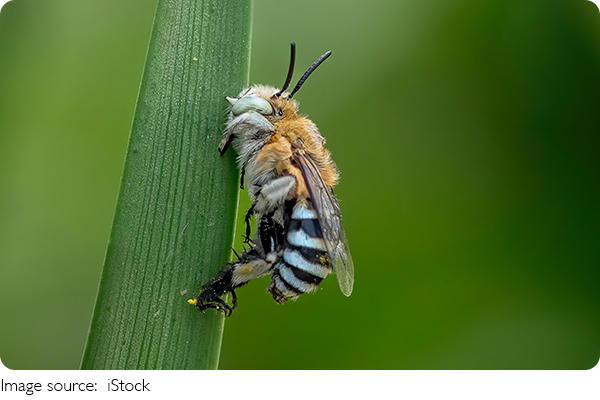
Bees are famous for their honey, but their social system is just as sweet. Inside a hive, tens of thousands of bees live together, and every bee has a role. Workers forage for nectar, guard bees protect the hive, and nurse bees care for larvae.
Perhaps the most fascinating part is the “waggle dance.” When a bee finds a good source of flowers, it doesn't just keep it to itself. It returns to the hive and dances, moving in a figure-eight pattern that encodes the direction and distance of the food source. The other bees watch, interpret the message, and fly off in exactly the right direction.
It's a form of communication that rivals GPS in accuracy, and it's done without words, maps, or technology.
Termites: The Silent Architects
While ants and bees may get more attention, termites are the unsung architects of the insect world. Some termite mounds stretch more than 20 feet tall—built grain by grain of soil by creatures barely longer than a fingernail.
What's remarkable is the design: these towers have built-in ventilation systems that keep the temperature and humidity stable inside. That's essential for growing the fungi termites depend on for food. To humans, it looks like mud piled high. To termites, it's a carefully engineered skyscraper.
Their building strategies are even inspiring architects to design sustainable, naturally cooled buildings. The next time you see a termite mound, think of it as a tiny blueprint for green architecture.
What We Can Learn from Insect Societies
You might wonder, what do ant trails or bee dances have to do with us? Surprisingly, quite a lot. Researchers have borrowed ideas from insect behavior to solve human problems:
1. Traffic flow: Algorithms inspired by ant trails help design smarter road systems and even data routing on the internet.
2. Robotics: Swarm robotics, where many simple robots work together, is modeled directly on how insects coordinate tasks without central control.
3. Sustainability: Termite mound ventilation has inspired eco-friendly building designs, reducing the need for air conditioning.
Insects show us that cooperation doesn't require complexity, communication doesn't always need words, and even small players can build massive systems when they work together.
A Final Reflection
Next time you spot a line of ants in the garden or hear the buzz of bees in a field, pause for a moment. Behind those tiny movements is a hidden world of teamwork, resilience, and invention. Insect societies may be miniature in size, but they hold giant lessons for us: that strength lies in collaboration, that communication is more than language, and that even the smallest creatures can leave the largest impact.