Grey Crowned Crane

Declan Kennedy
| 05-03-2026
 · Animal Team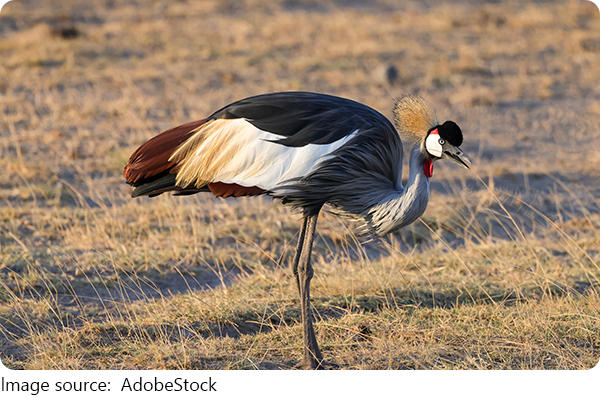
Walking across the grasslands of East Africa, your attention might be captured by a sudden splash of movement and color—a bird with a golden crown of feathers, moving gracefully across the plains.
That is the grey crowned crane, a species that stands out not only for its appearance but also for its intriguing behaviors and fascinating adaptations.
Watching one in the wild, it's impossible not to marvel at how elegance and survival coexist in such a striking package.
Grey crowned cranes are among the most charismatic birds in Africa. Their combination of elaborate plumage, social behavior, and adaptability allows them to thrive in diverse habitats, from wetlands to open savannahs. Each movement, from foraging to courtship displays, reveals a story of evolution and survival finely tuned to their environment.
Physical Features and Adaptations
1. Iconic golden crown
The most recognizable feature of the grey crowned crane is its spiky, golden crown of feathers. Beyond aesthetics, the crown may play a role in visual communication, signaling health and vitality to potential mates.
2. Strong, versatile legs
Their long legs are designed for wading through shallow waters and walking across grasslands. Equipped with sharp claws, they can scratch the soil to uncover insects and small invertebrates, which form a key part of their diet.
3. Distinctive calls and vocalizations
Grey crowned cranes have loud, trumpeting calls used for territory defense and mate attraction. These calls can carry across vast open spaces, ensuring communication even at a distance of several kilometers.
Feeding Behavior
1. Omnivorous diet
These cranes feed on a variety of foods, including insects, small amphibians, seeds, and grains. Their adaptability in diet allows them to exploit both wetland and grassland resources throughout the year.
2. Foraging techniques
They often use a methodical combination of pecking, scratching, and probing in the soil to locate hidden prey. This patient and careful approach maximizes energy efficiency while increasing foraging success.
3. Opportunistic feeding
Grey crowned cranes are known to forage near grazing mammals. As animals move through the grass, they stir up insects, which the cranes quickly catch, showcasing their adaptability and clever exploitation of the environment.
Behavior and Social Life
1. Elaborate courtship dances
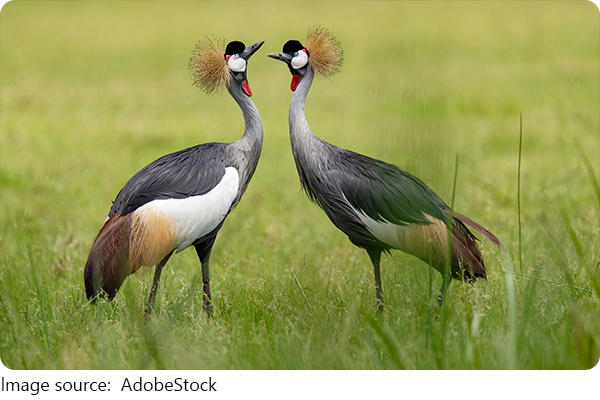
One of the most remarkable aspects of their behavior is the courtship dance, which includes bowing, jumping, wing flapping, and head tossing. These dances strengthen pair bonds and display fitness to potential mates.
2. Strong pair bonds
Unlike many bird species, grey crowned cranes form long-term monogamous pairs. They share responsibilities such as nest building and chick rearing, which enhances offspring survival rates.
3. Community and territory
They are social birds, often found in small family groups or loose flocks. While they defend territory during breeding, they also gather in larger numbers during migration or in food-rich areas, balancing social interaction with survival needs.
Observing grey crowned cranes highlights the blend of beauty, intelligence, and resilience in the animal kingdom. From their graceful movements and elegant displays to their practical foraging skills, every aspect of their behavior reflects the challenges and opportunities of life on African plains.
Next time you spot a grey crowned crane in a wetland or savannah, take a moment to watch closely. The intricate dance, the careful forage, and the interaction with their environment reveal more than just a striking bird—they show a story of survival, adaptation, and the extraordinary balance of nature in motion.