Succulent Care and Design

Pardeep Singh
| 02-06-2026
 · Plant Team
Succulents are the ultimate multitaskers of the plant world, arriving in a wild parade of colors, patterns, shapes, sizes, and textures.
They're basically the perfect roommates: low maintenance, visually interesting, and they won't judge you for forgetting about them occasionally.
Think of them as the houseplants that actually want you to succeed.
Keeping Your Succulents Happy Without Overthinking It
The number one succulent destroyer? Overwatering. These chunky little plants are like camels, storing water in their leaves for dry times ahead. They prefer infrequent but deep watering, and the soil should be allowed to completely dry out between waterings. Generally, water about once every 1-2 weeks in the summer, and less frequently in the winter, adjusting based on your climate and the succulent types. When in doubt, stick your finger in the soil. Dry and crumbly? Time to water. Still moist? Leave them alone.
Light is the other big deal. Many succulents need at least 6 to 8 hours per day of bright sunlight, with 10 being even better. Putting them right near a south-facing window is the best choice, though a west-facing window should also provide enough light. And here's a pro move: rotate your arrangement every week or two to ensure all sides get equal time in the sun.
Building Arrangements That Actually Look Good
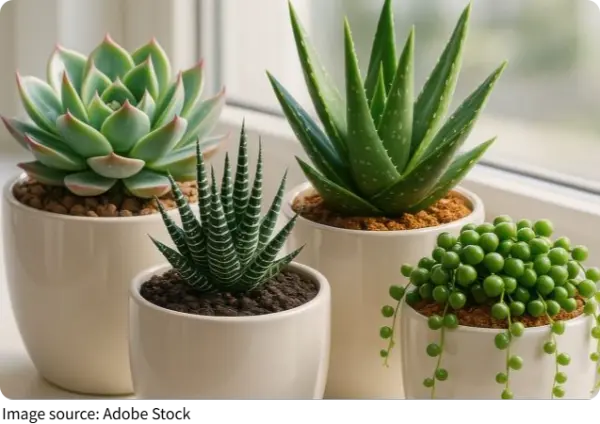
Creating a succulent arrangement is part science, part art, and entirely forgiving. Embrace the "thriller, filler, spiller" approach: choose a focal point plant (the thriller), which is usually the tallest or most visually striking succulent. Surround it with medium-sized plants (the fillers) to create depth and balance, then add trailing or cascading succulents (the spillers) to soften the edges and add a touch of whimsy.
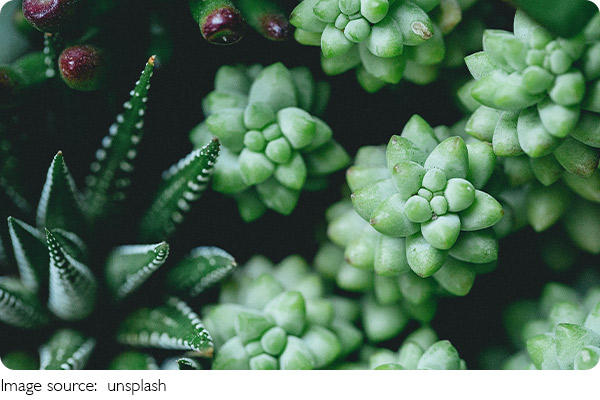
One of the best things about succulents is that they come in virtually every color of the rainbow, making it a lot of fun to arrange them based on common colors and patterns. Want to get fancy? Use a variety of succulents with different shapes, sizes, and colors to create an eye-catching arrangement. Mix rosettes with trailing types, throw in some spiky textures, and watch the magic happen.
The Secret Sauce: Matching Plant Personalities
Here's where beginners often stumble. Your arrangement needs to combine plants with similar lighting needs, and it's equally important to combine plants that need similar amounts of water. You can mix different types of succulents, just make sure they have similar care needs, like sunlight and water, to keep them happy together. Think of it like seating arrangements at a dinner party: you don't want to pair a sun-worshipping cactus with a shade-loving succulent.
Plant them in a fast-draining potting mix made specifically for succulents or cacti, or add a bit of sand and perlite to regular potting soil. Clay pots tend to dry out faster than pots made of other materials, so they're an excellent choice. Drainage holes are your best friend here.
Getting Creative With Containers
Why limit yourself to boring pots? Household items like teacups, bowls, and decorative boxes can double as charming planters, and you can upcycle thrifted finds into one of a kind planters. Incorporate additional decorative elements like rocks, sand, or sea glass to add visual interest and texture. The world is your oyster, or in this case, your planter.
The beauty of succulent arrangements lies in their flexibility and endless possibilities. Whether you're going for sleek and modern or whimsical and quirky, these resilient little plants will work with you, not against you. Start simple, experiment with color combinations and textures, and remember that there's really no wrong way to do this as long as your plants share similar care needs. Before you know it, you'll be creating living art that actually stays alive.